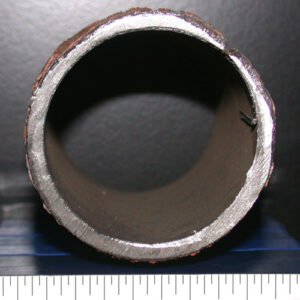
Acid dewpoint corrosion can occur in conventional and HRSG units in locations where temperatures fall below the sulfuric acid dewpoint temperature. This can occur when either the boiler tube metal temperatures are below the acid dewpoint so that condensate forms on the metal surface, or when flue gas temperatures are below the acid dew point, so that the condensate will form on fly ash particles.
| Boiler Type | |
|---|---|
| Fuel | |
| Boiler Region | |
| Metallurgy | |
| Failure |
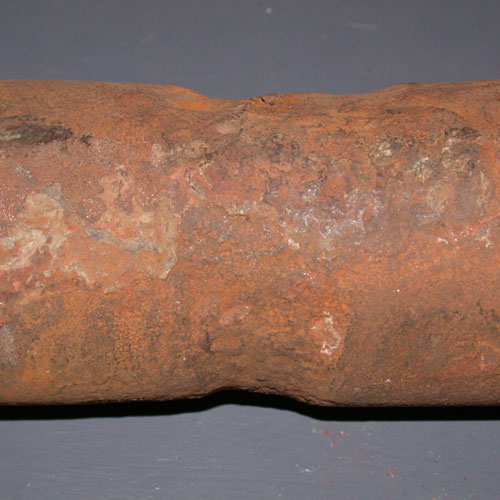

This type of fire-side damage occurs when sulfur dioxide (SO2) in the flue gas oxidizes to sulfur trioxide (SO3) and the SO3 combines with moisture to form sulfuric acid. If the temperatures are at or below the acid dewpoint so that the sulfuric acid condenses, then tube metal corrosion occurs. The temperature at which condensate first forms depends on a number of factors, including the partial pressures of SO3 and water vapor in the flue gas, and is usually around 250 to 300°F.
Several factors can influence the formation of acid dewpoint corrosion including excess oxygen, fuel firing, moisture levels, surface temperatures, and air in-leakage. The higher the level of excess oxygen in the combustion process, the more SO2 that will be converted to SO3 and the higher the acid dewpoint temperature. In addition to excess oxygen, other fireside conditions such as furnace design, furnace temperature, firing conditions, and burner performance will all affect the production of SO3. For example, staged combustion, used to control NOx, can increase excess air and the amount of SO3 produced. Air in-leakage can provide excess oxygen and cooling effects (lower temperatures).
While acid dewpoint corrosion is generally more of a concern for air heaters and the duct work to the stack in conventional units, it can occur in the economizer. Root causes include tube temperatures below the acid dewpoint, fuel and operating practices causing an increase in the acid dewpoint, or, for conventional units, locally low gas temperatures are caused by air inleakage. Low tube temperatures are often due to insufficient feedwater inlet temperatures, or for HRSGs, low exhaust gas temperatures.
Initially, all affected areas should be examined for wall thinning, including by ultrasonic thickness testing, and necessary repairs should be made. In the long term, mitigation will require raising the gas and metal temperatures above the acid dewpoint temperature or lowering the acid dewpoint. For both conventional and HRSG units, mitigation steps can include the use of lower sulfur fuel and periodic removal of ash deposits. Additional possible mitigation steps for HRSGs include: increasing the feedwater inlet temperature, avoiding low load operation, and upgrading of tube materials (e.g., Alloys 20, 825, or 625 or carbon steel clad with austenitic stainless steel or Alloy 825).