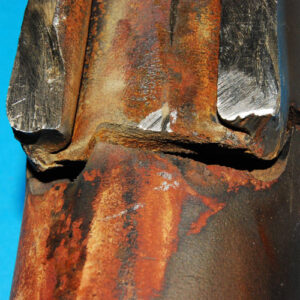
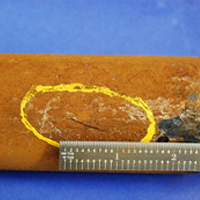
Caustic gouging (CG) is an under deposit corrosion (UDC) mechanism that has begun to increase in frequency in recent years at some fossil plant boilers and at combined cycle plants with heat recovery steam generators (HRSGs). Caustic gouging occurs in the presence of heavy tube deposits and sodium hydroxide that concentrates at the tube surface.
| Boiler Type | |
|---|---|
| Fuel | |
| Boiler Region | |
| Metallurgy | |
| Failure |
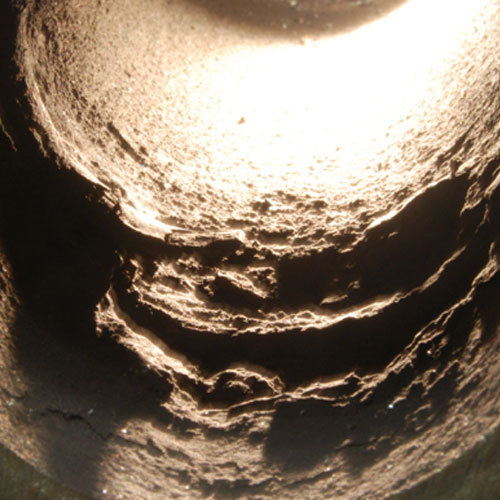


Caustic gouging requires a buildup of internal deposits along with a concentration of contaminant. The contaminant in this case is sodium hydroxide. Damage begins with the transfer and deposition of corrosion products in the boiler. Thermal-hydraulic conditions increase the concentration of caustic in the deposits. This concentrated caustic dissolves the protective magnetite layer, which leads to the formation of sodium iron oxides (sodium ferroate and sodium ferroite). The corrosion rate increases and final failure occurs when the reduced tube wall thickness can no longer support the internal pressure.
Caustic Gouging occurs where high levels of deposits are present and where caustic is present due to the addition of sodium hydroxide or to contaminant ingress containing the sodium ion. Poor feedwater treatment often results in high corrosion product levels. Deposits are most often the result of corrosion or flow-accelerated corrosion in the condensate/feedwater system in conventional plants or in the low pressure part of the HRSG followed by the transport of copper and/or iron into the waterwalls of conventional boilers or into the HP evaporator circuit in HRSGs. Deposition can also be influenced by disruptions in flow in the boiler waterwall tubing or in HRSG evaporator tubing, or it may be promoted by flame impingement and burner misalignment. Ineffective chemical cleaning or incomplete flushing may allow deposits to remain and concentrate. Chemical cleanings which are warranted based on deposit loading are often delayed. Process return streams from offsite steam systems may be another source of both corrosion products and sodium. Excess sodium hydroxide can accumulate when using caustic treatment (>2ppm), phosphate treatment, or with all-volatile treatment when caustic is introduced during startup or during an acidic contamination event to control pH. Other potential sources of sodium include upsets from the makeup water treatment plant or condensate polishers, or sodium hydroxide from the regeneration process. The online chemistry instrumentation must be adequate to identify excessive levels of hydroxide in the boiler/evaporator water and alert operations personnel to the high levels.
Widespread caustic gouging can be detected using ultrasonic techniques to identify areas with heavy wall loss. Failed tubes should be metallographically analyzed to confirm the failure mechanism. After the mechanism is confirmed, the root cause of the damage should be identified. The plant cycle chemistry should be reviewed and optimized to prevent future damage.
Damaged tubes can be replaced after they have been located. Pad welding should not be used to repair damaged tubes, as excessive penetration of the weld can lead to flow disruptions and reinitiate the damage. Chemical cleaning is recommended to remove heavy deposits.