
The leading heat recovery steam generator (HRSG) tube failure (HTF) mechanism for more than the last 10 years has been flow-accelerated corrosion (FAC). FAC can also occur in economizer tubing in conventional units.
| Boiler Type | |
|---|---|
| Fuel | |
| Boiler Region | |
| Metallurgy | |
| Failure |
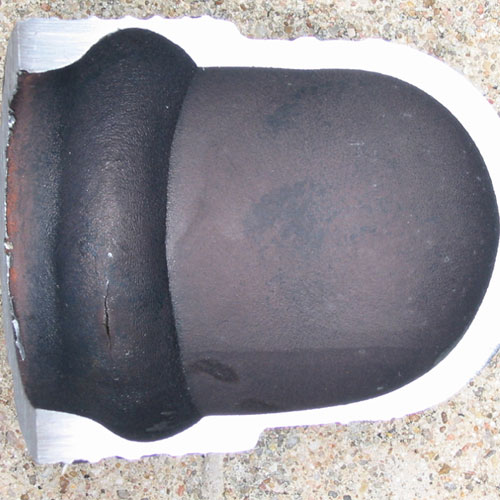
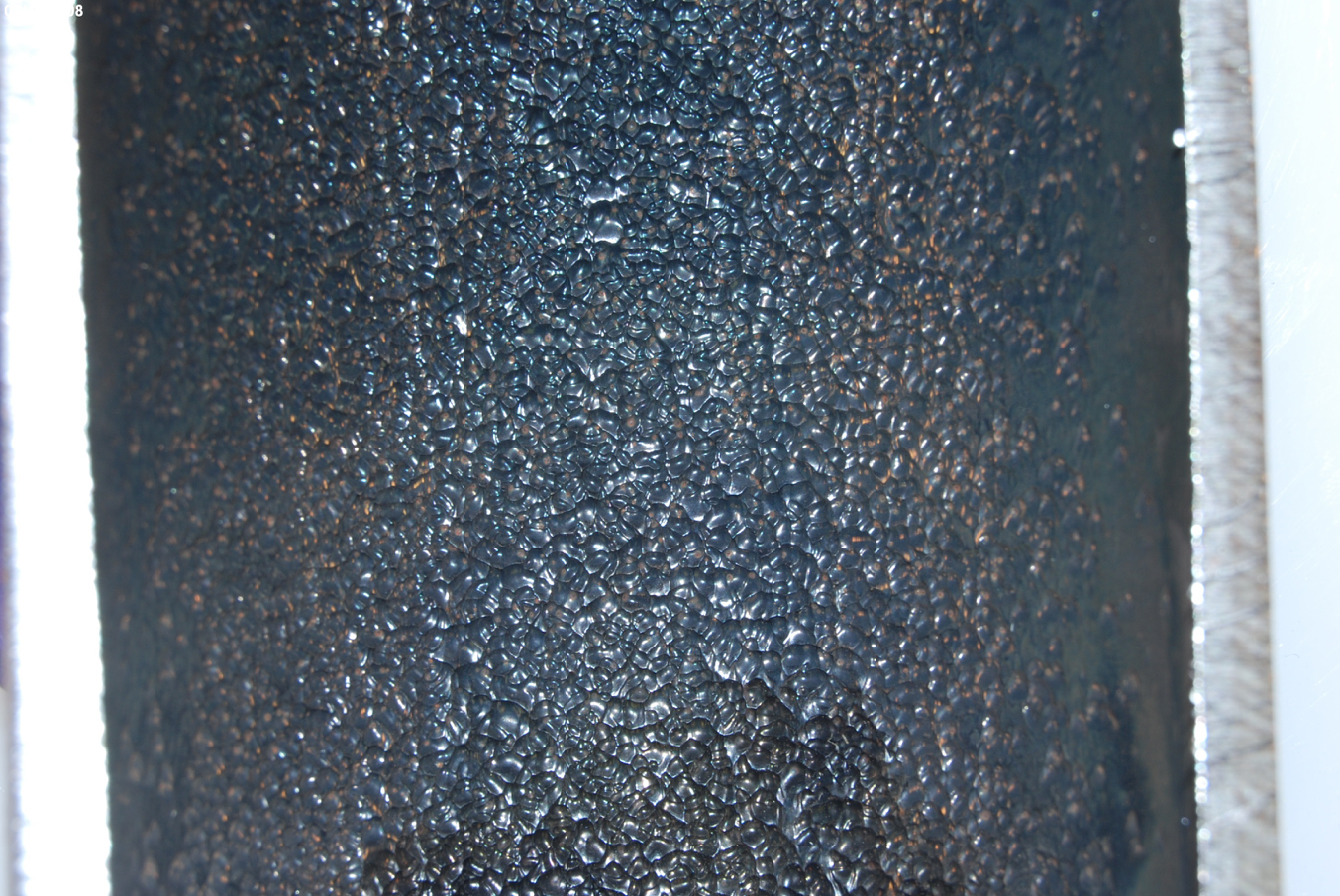
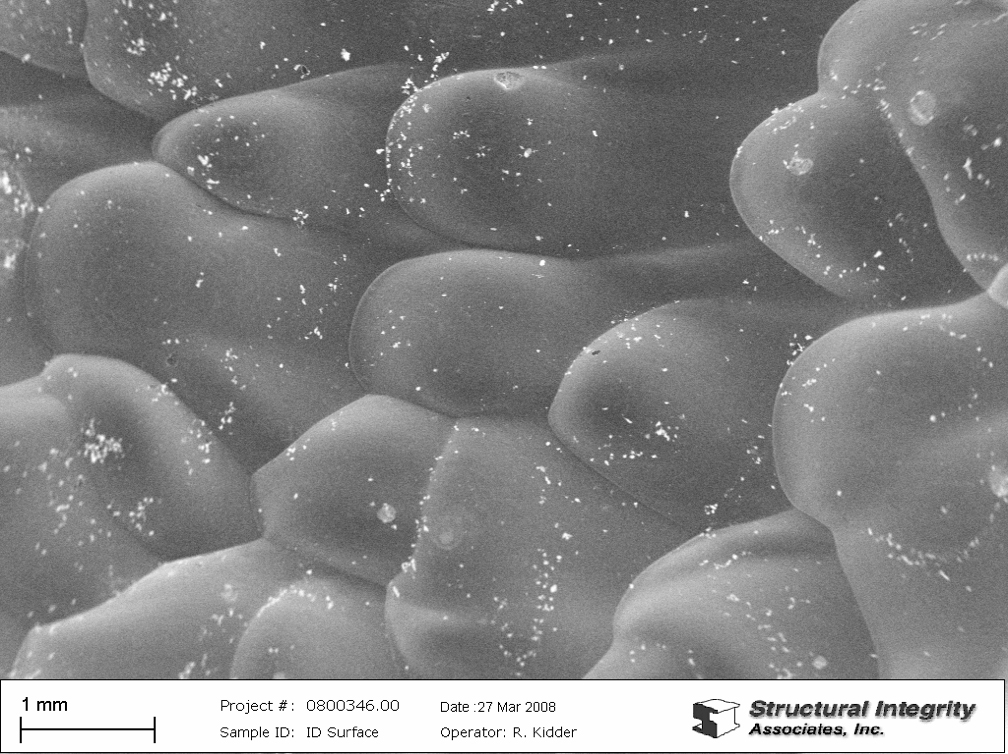
FAC is a very complex mechanism which is directly controlled by the cycle chemistry applied to the combined cycle/HRSG, and located by turbulent flow conditions. All carbon steel HRSG components within the temperature range 100-250°C (212-482°F) are susceptible. Damage occurs when the normally protective oxide layer on carbon or low- alloy steel dissolves into a stream of flowing water (single phase) or a water-steam mixture (two-phase). The oxide layer becomes thinner and less protective, and the corrosion rate increases. Turbulent conditions will increase the removal of magnetite which can promote the loss of tube/header wall thickness. A thinned component will typically fail due to overstress from operating pressure, or abrupt changes in conditions such as water hammer, start-up loading, etc.
There are a number of possible root causes of FAC. For single-phase FAC these relate to geometrical features which introduce turbulence into the local flow. For two-phase FAC a number of different root causes supplement this main one, such as steaming in economizers/preheaters, or thermodynamic inclusion of increasing amounts of steam as water is heated.
The first proactive approach to FAC must involve optimizing the cycle chemistry. SI uses a sequential three-pronged approach of: a) operating with an oxidizing chemistry, all volatile treatment – oxidizing [AVT(O)] or oxygenated treatment (OT), to control the single-phase component; b) operating with an elevated pH (up to 9.8) to control the two-phase component; and c) monitoring (analyzing the total iron concentration in the condensate, feedwater, and in each drum) to verify/confirm whether these approaches are successful. The last item involving monitoring the total iron in the feedwater (or at the boiler feed pumps), LP (and IP) drums is the main indicator of whether FAC is under control. Here, the SI “Rule of 2 and 5” (< 2 ppb total iron in the condensate/feedwater and < 5 ppb in each drum) provides the arbiter.
FAC in the LP or IP evaporator outlet tube sections and risers can often be visibly identified if access is available through the drum (belly plate) with fiber optics. Two-phase FAC in preheaters or economizers with 180 degree bends at the top of the unit can be monitored with UT on the plain bends; sometimes thermocouples attached at these locations will identify steaming.
FAC is often repaired by an in-kind replacement, but consideration should be given to changing the material to a chromium-containing alloy.


