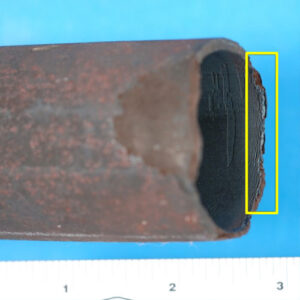
Long-Term Overheating/Creep (LTOC) in Steam-Cooled Boiler Tubes
Long-term overheating and creep damage are often the damage mechanism associated with the normal or expected end of life of steam-touched tubes, which generally occurs after 100,000 hours or more of service life at elevated temperatures and pressures. Long-term overheating and creep can also occur when the rate or accumulation of creep damage is moderately higher than anticipated by original design. There are a number of possible reasons for this, but in general the problem can be attributed to one of the following: a non-conservative original design; higher-than-anticipated heat absorption; lower-than-anticipated steam flow; or wall loss caused by external wastage.


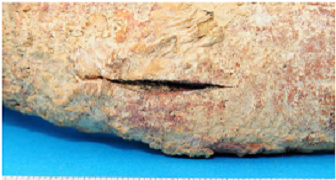
The reasons for the acceleration of the accumulation of creep damage in tubing can include poor design, material deficiencies, higher-than-expected heat absorption, reductions in normal steam flow through the tubing, and accelerated wall loss caused by the tube operating above its oxidation limit. With regard to poor design, this usually is related to the selection of an insufficiently strong or oxidation-resistant material for the specific location of intended operation and may involve failure to consider steamside oxidation effects, gas temperature imbalances across an assembly, radiant heat effects on lead tubes or on tubes in vestibules or openings, etc., or may be due to attempts to “stretch” material usage to the limits of an alloy’s capabilities. With regard to material deficiencies, this can be related to heats of material that are inherently creep weak or to material whose creep strength has been compromised by improper heat treatment. Excessive heat absorption in a tube can be related to over-firing of the unit or the improper staging of combustion to higher elevations. In addition, tubes can pick up temperature due to excessive slagging of the furnace walls, gas laning, or tube misalignment. In almost all cases increases in tube metal temperature related to reductions in steam flow are due to the presence of scale, debris, or chemical cleaning residue in the steam path. Local increases in stress due to the effects of external wastage can be caused by erosion or any of the high temperature corrosion processes.
Ultrasonic inspection techniques are useful for wall thickness readings and measurement of internal oxide thickness. It may be possible to measure swelling using either calipers, a pi tape, or a go/no-go gauge constructed specifically for the tubing in question. In determining which tubes should be replaced, a careful evaluation of the specific circumstances of the failure is essential so that the appropriate limits on wall thickness reduction, internal oxide thickness, or swelling are identified as the basis for replacement. In addition to any replacements, it is essential that a remaining life assessment of the assemblies in question be made so that future corrective actions can be anticipated and the appropriate planning for those actions can be completed.